

Solid State Transformers, the Truth Behind the Hype
Is there really a crisis with conventional transformers, or is this a solution looking for a problem?
If you read the write-ups around the need for solid state transformers (SSTs), you are painted a picture that conventional transformers are as hard to get as hens’ teeth. According to supporters of SSTs, the availability of Grain-Oriented Electrical Steel (GOES), critical to the production of conventional transformers, is in short supply in the US. However, SSTs, which utilize advanced power semiconductor devices and high-performance magnetics, are considerably more expensive than conventional transformers. Today, The Fusion Report will examine the real need for SSTs, and the potential that they can hold for the electricity grid.

The Deal For (GOES) Steel In Transformers
Transformers have been part of the electrical industry for nearly 140 years. The first high-efficiency closed core transformers were developed by Hungarian engineers in 1885, and were made practical by William Stanley while working for Westinghouse in 1886. Those were followed by the first three-phase transformers in the early 1890s.
Today, these devices are a ubiquitous part of the electrical/electronics industry, with the result that the global transformer market is valued at approximately $57–$65 billion (US) in 2023/2024. Moreover, the transformer market is projected to reach between USD 82 billion and USD 137 billion by early 2030. Asia/Pacific is the dominant player in the market, with 30.46% of the total market share.
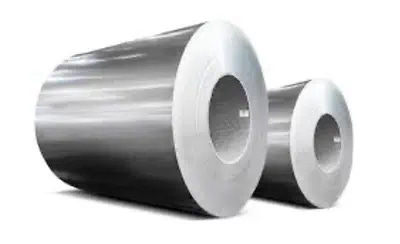
A key part of modern transformers is their core, which is made utilizing grid-oriented electrical steel (GOES). The difficult part of this is that GOES is only made by one company in the US. Conventional transformers are also bulky, oil-insulated, passive designs which do not provide active voltage regulation or grid communication capabilities. Additional shortcomings also include performance inefficiencies (around 95%) and reliability shortcomings due to insulation degradation and deformed winding over time, all of which require significant maintenance over time.
The (Industry-Desired) Transition to Solid State Transformers
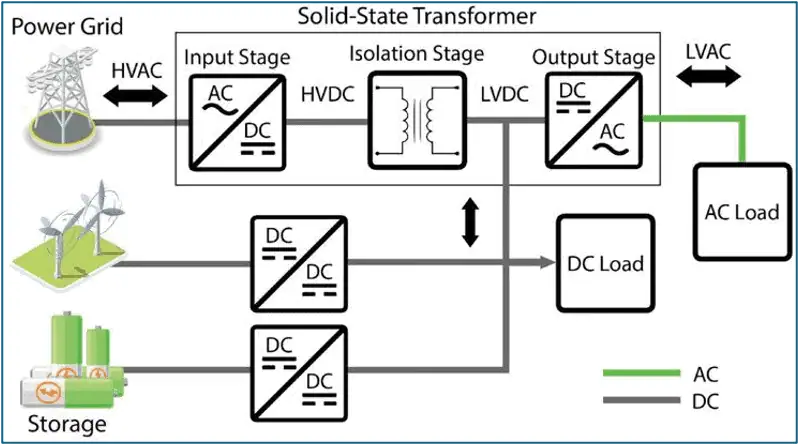
Enter solid-state transformers (SSTs) into the picture. Really a misnomer, SSTs add a significant number of non-transformer capabilities over conventional transformers. These include the following:
Smaller Size and Weight: Because they use high frequency switching, SSTs can be one-third the size and weight of standard transformers.
Increased Efficiency: SSTs can sport efficiencies of up to 99%, significantly higher than that of conventional transformers.
DC Capabilities: This is the game changer for SSTs. While conventional transformers can only support AC voltages, SSTs can support AC to DC rectification as well as DC voltage transformation. This allows them to integrate seamlessly with renewable resources such as solar panels.
Improved Power Quality: SSTs can actively suppress harmonics, correct power factors, and provide stable power to sensitive systems.
Lack of environmental contamination: SSTs eliminate the need for mineral oil, reducing potential environmental contamination.
Ability to Support System Monitoring and Management: Because SSTs are smart devices, they can also be monitored and configured remotely.
SSTs: The Hype, The Reality, and the Potential
SSTs are currently more expensive than conventional power transformers. This is mainly due to the use of advanced power semiconductors, complex high-frequency conversion stages, and sophisticated digital control and protection systems in SSTs. Industry analyses and prototype data indicate that, for comparable power ratings, solid-state units today can cost around five to ten times as much as traditional low-frequency transformers, with a 50 kVA solid-state transformer reported in the range of about $60,000-$100,000 versus $6,000-$10,000 USD for a conventional transformer.
This high upfront capital cost is widely cited as a key barrier to wider adoption, particularly for budget-constrained utilities and smaller industrial users. However, like all electronics, the prices of SSTs will certainly drop over time. In particular, ongoing improvements in power electronics and production scaling for high-frequency switching systems are expected to gradually reduce prices over time.
Conclusion: Give SSTs More Time To Reach Competitive Price Points
These are currently underdeveloped by a number of companies, both startups and existing ones. While they will initially be utilized for niche applications that need the higher performance and capabilities, the reduced prices of SSTs over time will increase their price competitiveness versus conventional transformers. As companies such as General Electric, Siemens AG, Hitachi ABB Power Grids, Schneider Electric, Eaton Corporation, and Mitsubishi Electric Corporation join the fray, price drops for SSTs are likely to occur over the next decade as they enter the mainstream.